Market needs and contemporary society have evolved to such an extent in recent years that industries have focused on expanding and refining many of their basic processes so that sectors such as automotive, architectural, healthcare, and electrical can meet the demands of their customers.
In this regard, and focusing on the field of
die tooling, Estampaciones JOM has made significant efforts to offer much more versatile, high-quality solutions, particularly when it comes to the
industrial stamping process, updating its techniques to manufacture parts, products, and tools in large series, gradually moving toward automation.
Why industrial stamping?
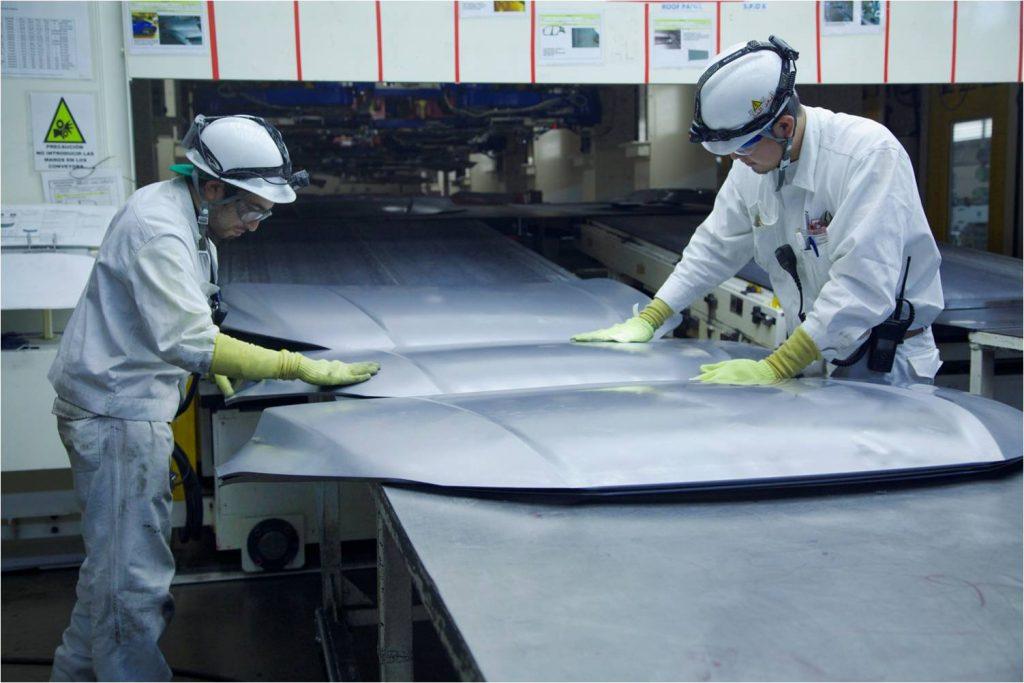
Industrial stamping is defined as a process that shapes or transforms various types of metallic materials into functional parts or tools for one of the sectors mentioned above. In many cases, metals such as copper or aluminum are the most widely used, with high or low temperatures applied in one way or another to facilitate deformation of the material through compression plates.
Given its broad and varied scope, industrial stamping can also be applied to other types of metals, such as brass, aluminum, stainless steel, and non-ferrous bronze alloys. Faced with this diversity of raw materials, techniques such as punching or
sheet metal cutting are required. As a pioneering company in this field, Estampaciones JOM has progressively specialized in these and other specific industrial stamping techniques to meet any type of requirement.
Cold and heat in industrial stamping
Returning to basic industrial stamping, the application of high temperatures increases the roughness of materials, making them more malleable in a considerably shorter time; however, this advantage affects both the functionality and the dimensional accuracy of the products and results, as they tend to be rigid, with a lower mechanical performance and less precision in their finishes.
On the other hand, the influence of low temperatures, together with the use of sheets or plates of different uniform thicknesses, makes it possible to achieve deformations and modifications in the material with a greater degree of detail, which is why this approach is ideal for more delicate work or manufacturing.
Find out more about
JOM’s industrial metal stamping service.