


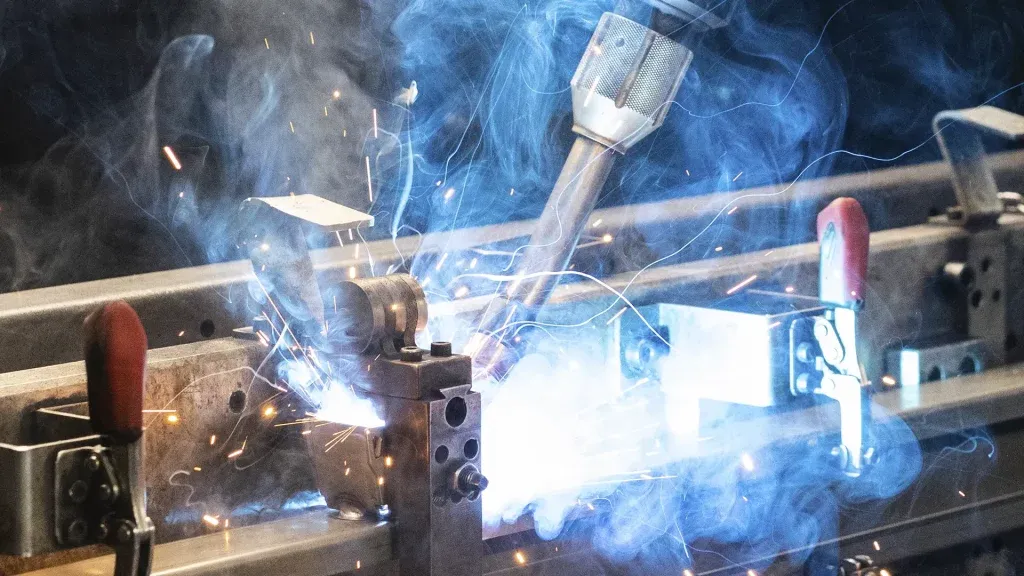
You’ve probably seen a video on social media about the wonders of laser welding. It’s true—and here at JOM, we’re already equipped with this technology! Below, we’ll explain the applications and advantages of this industrial process:
Laser welding is a cutting-edge technology that is revolutionizing the metallurgical industry due to its precision, speed, and versatility. This type of welding uses a highly concentrated laser beam to fuse metallic materials, offering a number of benefits that make it particularly well-suited for the manufacture of high-quality metal components, such as those produced by JOM METAL PARTS MANUFACTURING, S.L.
Key Advantages of This New Method
1. High Precision and Quality in Laser Welding
Laser welding allows for precise control over the weld spot, resulting in cleaner, higher-quality joints. Thanks to its precision, laser welding is ideal for working with delicate parts or those with complex geometries, and its ability to focus allows for welding specific points without damaging the surrounding area. This results in aesthetically superior finishes and greater structural integrity of the parts.
2. High Processing Speed
Laser technology is significantly faster than other traditional welding methods, which helps increase productivity. This speed is due to the laser’s high energy density, which allows it to weld materials in less time. Speed is a key advantage in automated production lines and large-scale manufacturing, where the goal is to optimize processing time without sacrificing quality.
3. Application on Delicate and Thin Materials
Laser welding is particularly advantageous for working with thin materials such as aluminum or stainless steel, which can easily warp when exposed to heat. Thanks to the laser’s thermal control, it is possible to weld these materials without compromising their integrity or causing distortion. This factor is essential in the manufacture of parts that require precision and care, minimizing the need for rework and subsequent adjustments.
4. Reduction of Deformations and Distortions
Because the laser applies heat in a localized manner, the heat-affected zone is minimal. This reduces the amount of stress and distortion in the parts during the welding process, a significant advantage for high-precision components or those that need to be assembled later without losing their alignment. Minimal distortion also reduces the need for post-welding grinding processes.
5. Automation Capabilities
Laser welding can be easily integrated into automated production systems, making it ideal for mass production. This method combines the precision and speed of the laser with the efficiency of automation, optimizing production times and reducing human error. In addition, the laser can be controlled remotely and parameters can be adjusted to achieve a more flexible and repeatable process.
6. High-Strength, Durable Welds
Laser technology enables deep, strong welds, which are essential in industries that require high durability in their products. This method produces joints that can withstand high stresses and extreme conditions without premature deterioration, ensuring high performance and longevity for the parts.
Conclusion
Laser welding offers a range of advantages that make it the top choice for manufacturing metal components, especially in industries where precision, speed, and durability are essential. At JOM METAL PARTS MANUFACTURING, S.L., we leverage this advanced technology to deliver high-quality products, optimize our production processes, and ensure customer satisfaction. This method not only improves efficiency but also sets new standards for quality and reliability in the metalworking industry.